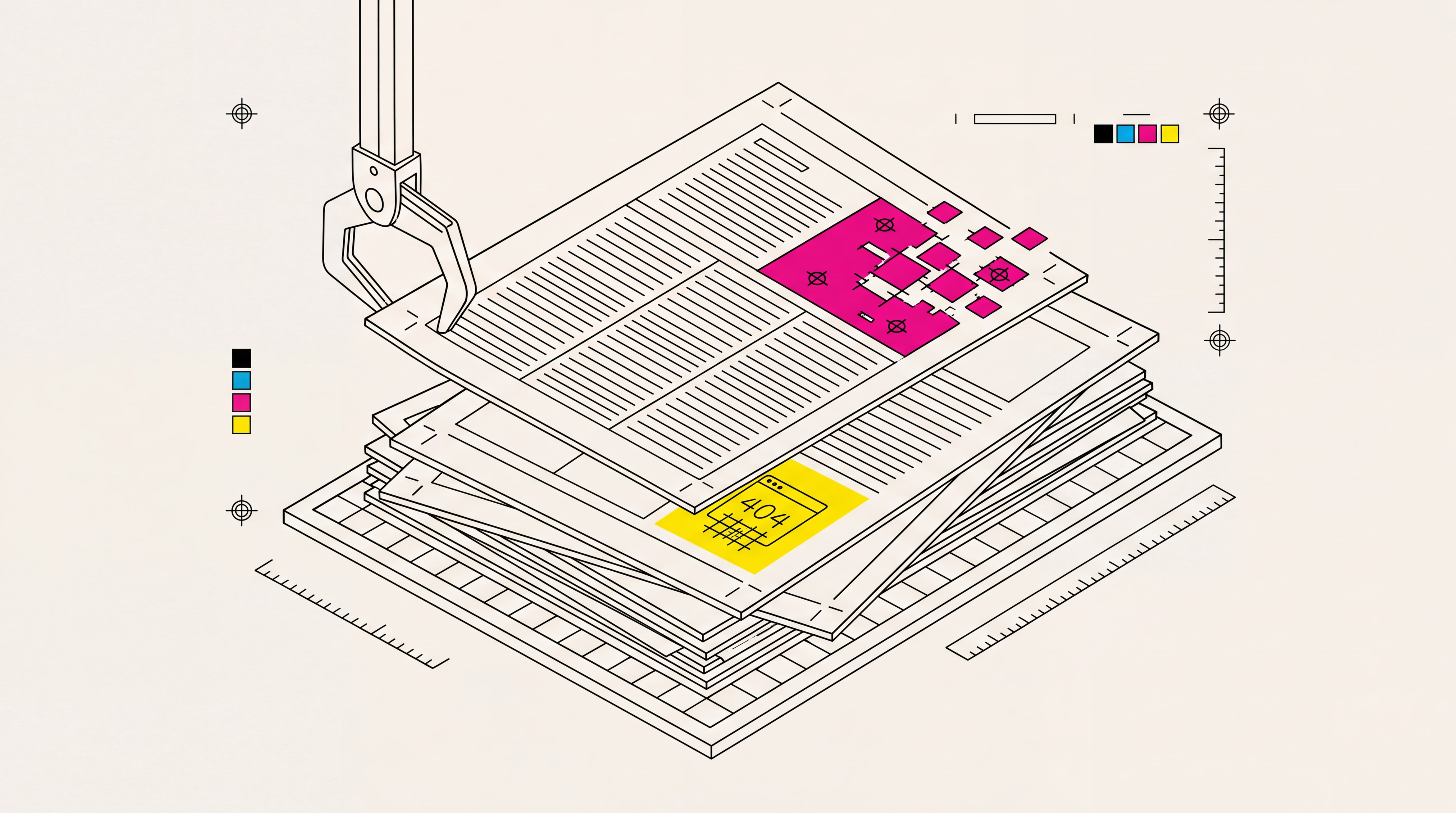
Salon, the American digital news and commentary publication, announced its closure in late 2026 after 31 years of operation. It was one of the founding generation of independent web-first publishers — a title that existed before most of its eventual competitors and long before the platforms that would eventually hollow out its business model. Its closure is worth examining not as a media obituary, but as a case study in what happens when audience and revenue are allowed to drift apart for too long.
The implicit question Salon's collapse raises is a sharp one: if you can build a recognisable editorial brand over three decades, attract significant traffic, and maintain journalistic credibility, why isn't that enough to survive? The honest answer is that it was never going to be enough, because reach is not a business model.
Reach Was Never the Asset It Appeared to Be
The story of digital publishing's first generation is largely a story of mistaken confidence in scale. The logic ran like this: build an audience large enough, and advertisers will pay to access it. For a period, that logic held — imperfectly, but well enough. Then two things happened simultaneously. The platforms (Google and Meta principally) captured the overwhelming majority of digital advertising revenue, and the programmatic advertising ecosystem — the automated buying and selling of ad space across the web — compressed the value of a display impression to something close to worthless for anyone who wasn't operating at massive scale.
Salon sat in the worst possible position: large enough to depend on advertising, not large enough to compete with the platforms that had eaten the market. The audience was real. The revenue was not proportionate to it.
This is what might be called the Leaky Bucket problem. Traffic flows in. Some of it generates advertising revenue. But because the relationship between publisher and reader is shallow — the reader has no particular loyalty to the page they landed on from a search result or a social share — there is no floor to that revenue. Every algorithm change, every shift in platform policy, every drop in advertiser spend flows straight through the bottom of the bucket. The audience never converted into an asset the publisher actually owned.
The Ad-Tech Trap Is Structural, Not Incidental
It is worth being precise about why programmatic advertising is so corrosive for independent publishers specifically. Programmatic means that ad space is auctioned automatically, in real time, with the price driven down by competition and the value of each impression assessed algorithmically. The result is that the actual editorial context — the fact that an article is well-written, that it attracts an educated or high-income readership, that it has taken months of journalism to produce — is largely invisible to the buying system. What the system prices is the demographic profile of the user, not the quality of the environment.
This means a serious publisher competing in a programmatic market is competing against every other publisher in that market, including the least editorially rigorous. The race is structural. The floor is low. And independent publishers with genuine editorial costs are at a permanent disadvantage.
Salon ran this race for a very long time. The closure is the logical outcome.
What Survival Actually Requires
The alternatives are not mysterious, but they do require a different conception of what a publishing business is for.
Subscriptions establish a direct financial relationship between publisher and reader. The revenue doesn't depend on advertiser sentiment, platform algorithms, or the programmatic market. It depends on whether readers find the publication valuable enough to pay for it — which is a harder question to answer, but a more honest one. Publications that have built subscription models around specific, committed audiences have shown that this model is durable in ways that ad-dependency is not.
Specialist licensing and syndication are underused by most independent publishers. If a publication has genuine editorial authority in a defined area, that content has value to other organisations — membership bodies, trade associations, corporate publishers — who need quality content and lack the capacity to produce it. This is a revenue stream that doesn't require audience scale; it requires editorial credibility and a commercial relationship.
Direct commercial partnerships — where an advertiser funds content, an event, or a service in a relationship negotiated directly — allow publishers to price their actual editorial environment rather than submitting to what the programmatic market will pay. This is not the same as native advertising in the pejorative sense. It is simply bypassing the intermediary that has been extracting most of the value.
First-Party Data Is the Only Asset That Compounds
Underpinning all of these alternatives is a single principle: the publisher must own the relationship with the reader. An email address from a subscriber or registered user is an asset the publisher controls. A pageview from a search referral is not. Social followers are not. Programmatic impressions are not.
Salon's closure is a reminder that you can build an audience on rented land — search traffic, social referrals, platform distribution — and have almost nothing to show for it commercially when the rent goes up or the landlord changes the terms. The publications that survive the next decade will be the ones that treated reader relationships as infrastructure, not as a byproduct of content production.
If you are running a publication now, the question is not whether Salon's fate applies to you. It is whether you have built enough of a direct relationship with your readers that you would still have a business if your search traffic halved tomorrow. Most publishers who answer that question honestly find the answer uncomfortable. That discomfort is useful. Act on it.
More from the Journal