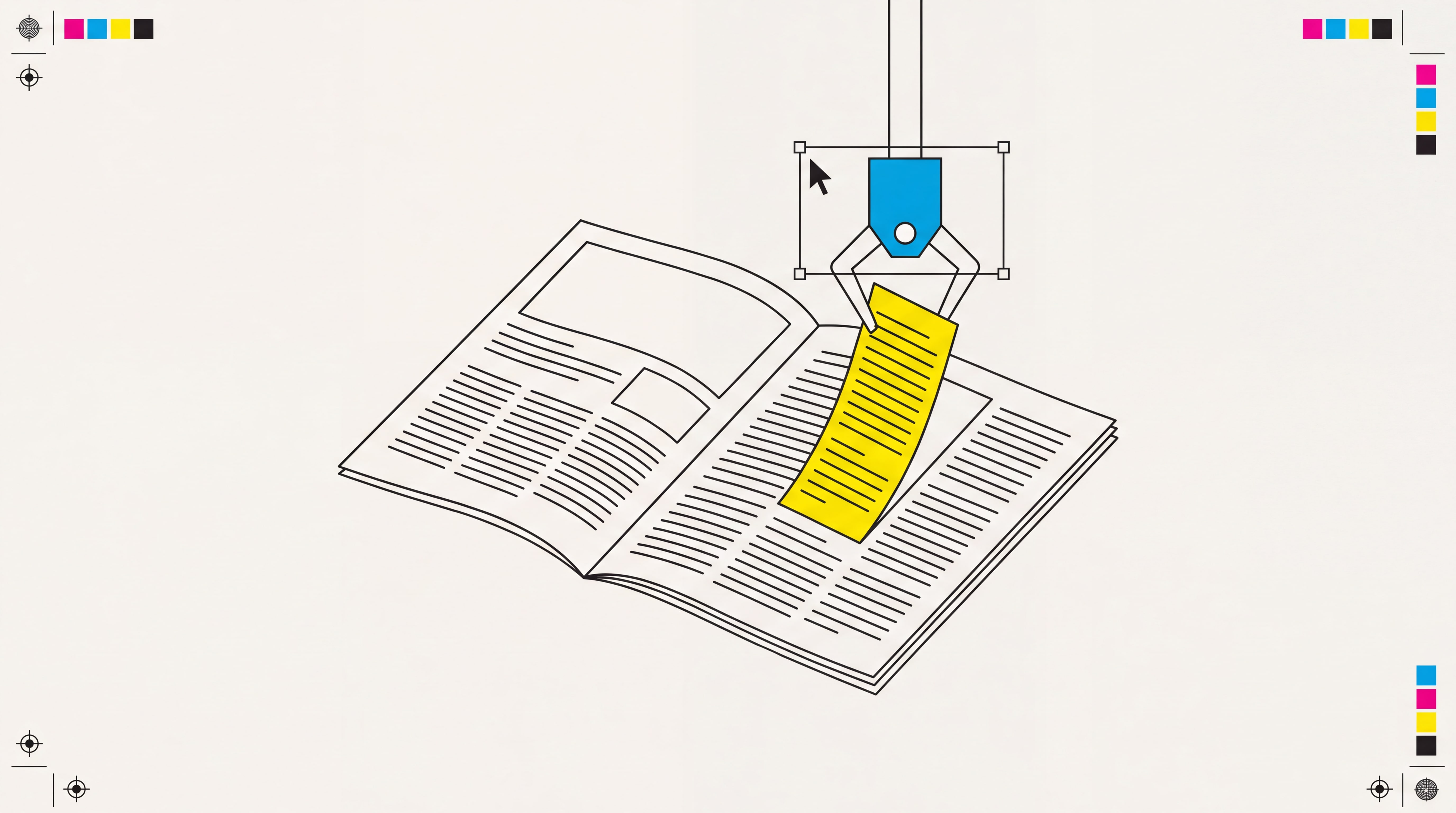
There’s a question I’ve started asking the associations and trade bodies I work with. Do you know if AI has taken information from your publications without your consent?
So far, almost nobody has been able to answer it. That isn’t carelessness. Nobody has asked them before, and nobody inside the organisation has the job of finding out.
For most of the time I’ve been making magazines, the route to an association was simple. Someone in your field had a question. They searched, found your website, read your journal, and if you were doing your job well, they joined. Your publications were the front door.
“Neither of those is a strategy. Yet most organisations are sitting in one position or the other right now, and very few chose it.”
That route is changing. More and more people now type their question into ChatGPT, Perplexity or Google’s AI and take the answer they’re given. They never reach your website. The answer is built from content gathered across the internet, and that can include your magazine, your guidance notes and years of your archive. Sometimes it credits you. Often it doesn’t. Sometimes it’s right. Sometimes it confidently tells people something you corrected three years ago.
Open or locked: the choice nobody made
##
This is where it gets interesting for a membership organisation, because there’s a real tension at the heart of it.
If you open everything up, AI can read it all. You’ll show up in the answers, and you might be credited as the authority in your field. But you’re also handing over, for free, the expertise your members pay for. Why would anyone join for access to the journal if a chatbot will summarise it for them?
If you lock everything down, your content is protected. But you start to disappear from the place people now go for answers. When someone asks about your sector, the AI talks about your competitors, or a trade press article, or a forum post, and not about you.
Neither of those is a strategy. Yet most organisations are sitting in one position or the other right now, and very few chose it. It was decided years ago by whoever built the website, or by a default setting in a plugin, or by nobody at all.
Whose job is this?
That’s the gap. A lawyer will tell you who owns your content, but not what to do about AI visibility. An SEO agency will chase traffic, but won’t understand why your members’ journal is different from a blog. Your IT supplier looks after systems, not editorial. And your communications team is already stretched producing the next issue.
Nobody is looking across the whole picture: what you publish, who owns it, what’s worth giving away, what’s worth protecting, and how AI is changing the way people find you.
“The decisions about your content are being made either way. It’s better that you make them.”
I’ve spent over thirty-five years designing and producing magazines. I know what goes into an issue, where the photographs come from, which features members value and which pages are there to bring new people in. That’s the knowledge you need to make these decisions sensibly, title by title, rather than with one switch for the whole website.
What the AI Readiness Check looks at
It covers four things.
The first is visibility. When someone asks an AI about your field, do you appear? Are you cited as the source? Are the facts it gives about you correct? This is what people have started calling generative engine optimisation, or GEO. Put simply, it’s whether the machines that now answer people’s questions know who you are.
The second is protection. Which of your magazines, archives and member resources can AI companies currently read? Who actually owns what you’ve published, including freelance articles and photography? And what have you allowed, knowingly or not?
The third is use. AI isn’t only a threat. There are practical ways it can save a small team real time: turning conference talks into articles, making a decades-deep archive searchable for members, helping draft newsletters, or turning your magazine into audio so members can listen on the way to work. I’ll look at where it could genuinely help you, and where it would be a distraction.
The fourth is pitfalls. Wrong answers about your organisation circulating as fact. Members quietly deciding they can get what they need elsewhere. Staff pasting member details into public chatbots without realising where that information goes. Most of these risks are easy to manage once you know they’re there.
What you get
You get a report in plain English, with recommendations for each of your publications: what to open, what to lock, what to fix, and where AI could actually work for you. If your committee or board needs to hear it, I’ll present it to them directly. It isn’t a sales pitch for software, and it isn’t a forty-page document nobody reads.
Start with the question
Go back to where we began. Do you know if AI has taken information from your publications without your consent?
If you can answer that confidently, you’re ahead of most. If you can’t, that’s exactly why this check exists. The decisions about your content are being made either way. It’s better that you make them.
You’ll find the AI Readiness Check at plandesignpublish.com, or just get in touch and we’ll talk it through.
More from the Journal