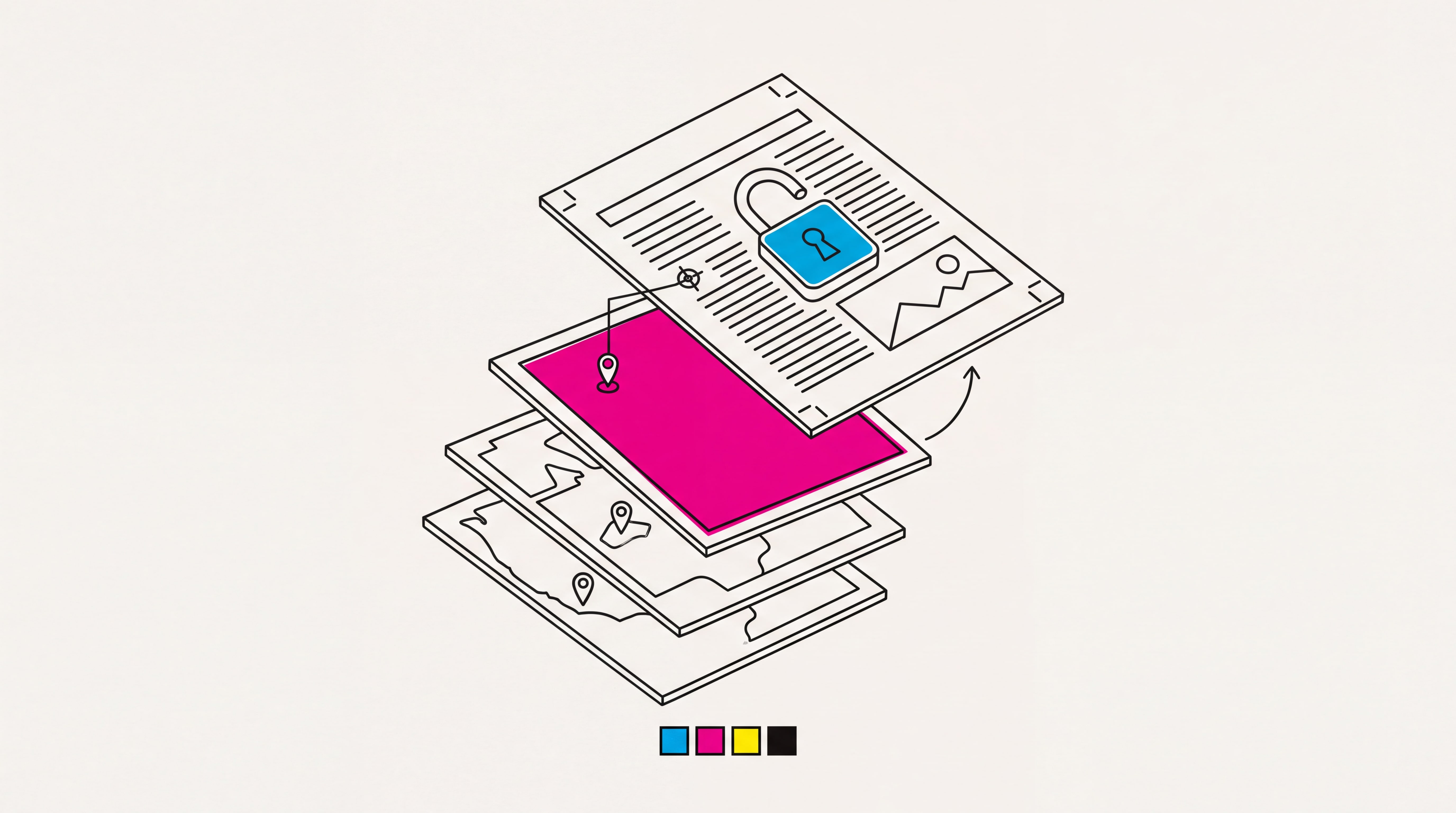
When Amazon accounts for 70 percent of a mid-size independent publisher's sales, the arrangement looks like distribution. It is actually a trade. You get reach and fulfilment infrastructure. You give up margin, pricing control, and — most critically — every piece of data about who bought your books, why they bought them, and whether they ever came back.
That trade made sense when there were few alternatives. In 2026, the alternatives exist, the infrastructure has matured, and the cost of continuing to make that trade has become structurally unsustainable for publishers operating below a certain scale. This is not a moral argument against Amazon. It is a commercial one.
What D2C Actually Means in a Publishing Context
A webstore bolted onto an existing publishing operation is not D2C. It is a cart. A genuine direct-to-consumer model means owning the transaction, the customer record, the fulfilment relationship, and the ongoing communication channel. It means your reader is in your database, not Amazon's.
The 30 percent D2C revenue projection for independent and niche publishers — flagged in Digital Book World's 2026 forecast — is not a ceiling or a floor. It is a benchmark that only becomes meaningful when you read it against publisher type. For a specialist academic press with a loyal institutional audience and backlist depth, 30 percent D2C is probably underperforming. For a small literary fiction imprint with no existing email list and no fulfilment capability, it is currently impossible. The number tells you where the industry is moving. Your catalog, your audience relationship, and your operational readiness tell you whether you can move with it.
The Data Argument: Why First-Party Reader Relationships Change Everything
Here is the before-and-after. Without reader data, you make acquisition decisions based on category trends, agent submissions, and what sold well at retail — information that is either lagging or filtered through someone else's commercial logic. You market your backlist by category and hope the algorithm surfaces it. You design subscriptions around what feels right for your list.
With first-party data, you know that 40 percent of readers who bought your debut literary thriller in hardback also bought a specific backlist title within 90 days. You know which acquisition email subject lines drove opens versus conversions. You know your subscription churn rate by reader segment, and you know it in time to do something about it. These are not abstract insights. They are the inputs to specific commercial decisions: what to reprint, what to promote, what to acquire next, and how to structure an offer that retains a lapsing subscriber.
Data ownership is not a relationship strategy. It is a decision-making capability. Publishers who frame it as the former spend money on CRM tools they do not know how to use. Publishers who frame it as the latter build operations that compound in value over time.
Social Commerce as a Funnel, Not a Final Destination
By 2026, short-form video platforms will have evolved into full-funnel e-commerce ecosystems, enabling one-click book purchases without leaving the app. The mechanism already exists in prototype form on TikTok Shop. The publishing industry's instinct has been to treat this as a discovery channel that routes traffic to Amazon. That instinct is expensive.
The difference between driving sales to Amazon via viral BookTok content and building a funnel that captures that traffic into your own CRM is, in most cases, a single deliberate design decision: where does the link go, and what happens when someone clicks it. A video that drives to your own store with a first-order incentive, captures an email address at checkout, and enrolls the buyer in an automated welcome sequence is a D2C acquisition tool. The same video driving to an Amazon product page is a donation to Amazon's customer database.
This requires actual funnel design — landing pages, email capture, post-purchase automation, and an offer compelling enough to make a new reader choose the slightly less frictionless option. That is not technically complex. It is operationally deliberate, and most publishers have not made the deliberate choice yet.
The Creator Economy Template: What Authors Already Know
Authors running direct subscription models on Substack or Patreon have already demonstrated something important: readers will buy direct when the value proposition is clear and the relationship feels genuine. Some mid-list authors are generating meaningful income — in some cases exceeding advance-and-royalty earnings — by selling directly to audiences they have spent years building.
The lesson for publishers is not that authors are competitors, though some are. It is structural. The author D2C model works because the creator controls the communication channel, the pricing, and the offer. Traditional publishers ceded all three to retail partners years ago and have been trying to recover them ever since. The creator economy is not a threat to study from a distance. It is a working template for what reader-owned relationships produce commercially.
The Operational Reality: What D2C Actually Costs to Run Well
Fulfilment is where most publisher D2C ambitions stall. Shipping individual orders is categorically different from shipping pallets to a distributor, and the unit economics look punishing until you reach volume. Print-on-demand integration solves part of this — and it does so while simultaneously addressing the sustainability compliance requirements now being mandated in the EU and North American markets, where digital product passports tracking a book's carbon footprint will become standard. POD eliminates overstock, reduces warehousing, and makes single-unit fulfilment economically viable for backlist titles. It is not a compromise format in 2026. It is an infrastructure choice.
Beyond fulfilment: you need a CRM platform you actually use, an email marketing capability that goes beyond occasional newsletter blasts, and someone — a real person, not a contracted afterthought — responsible for the ongoing reader communication programme. The publishers who underestimate D2C staffing requirements are usually the same ones who treat it as a side project rather than a primary channel.
Honest Trade-Offs: Where D2C Has Limits
Amazon's discovery infrastructure is not replaceable by a well-run webstore. A reader who has never heard of your press will not find you through your own site. For mass-market trade publishers with broad titles and shallow reader loyalty, the D2C calculus looks very different than it does for a specialist imprint with a defined community. The argument for D2C is not that retail partnerships should be abandoned. It is that they should not be the only relationship a publisher has with its readers — because right now, for most publishers, they effectively are.
Before You Make D2C a Strategy, Check These Four Things
First: Do you have an audience that already knows you exist, or are you building that from scratch? D2C does not create audiences; it monetises ones you have already earned.
Second: Do you have fulfilment infrastructure — whether in-house, through a third-party logistics partner, or via print-on-demand — that can handle direct orders without destroying your unit margins?
Third: Do you have a CRM and email capability that you are actively using, not just paying for? A dormant mailing list is not a D2C asset.
Fourth: Do you have the marketing capability — internal or contracted — to run acquisition campaigns, conversion funnels, and retention programmes simultaneously? D2C without active marketing is a webstore that nobody visits.
D2C is not a channel you add to your existing operation. It is a capability you build, and building it properly takes longer than most publishers expect. The publishers positioned to make it work by 2026 started making deliberate decisions about reader relationships two or three years earlier. If you have not started, the question is not whether D2C is a good idea. The question is how much runway you have left to build it properly.
Explore related guidance in Plan. Design. Publish. on subscription model design, print-on-demand infrastructure, and first-party data strategy.
More from the Journal