Listen to this article
0:00 / 5:34
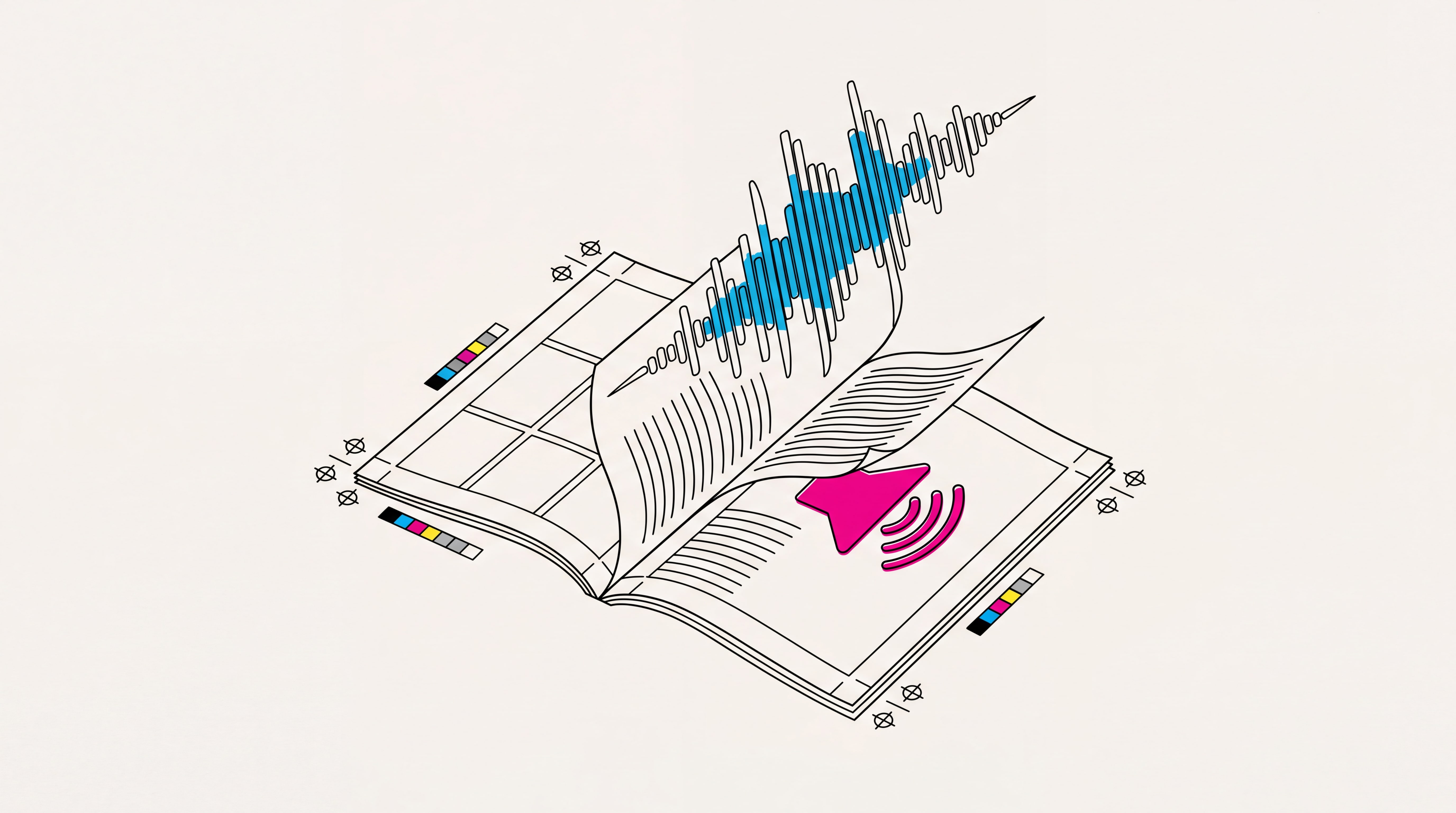
Publishing has always been about connecting information with an audience. Whether through a printed magazine, professional journal, newsletter or website, the objective remains the same: to deliver something worth reading.
But reading requires time and attention. And increasingly, both are in short supply.
A magazine might arrive on a member's desk, an email might be opened between meetings, or an interesting article might be saved for later. The content may be excellent, but finding time to sit down and read it is another matter entirely.
Audio offers another way in.
The publication you can take with you
Consider the difference between reading a ten-minute article and listening to one.
The first generally requires sitting down, looking at a screen or printed page and concentrating on the text. The second can happen while travelling, walking, exercising or performing everyday tasks.
The information hasn't changed. The opportunity to engage with it has.
For professional associations and membership organisations, this is particularly relevant. Their publications often contain valuable specialist information, industry developments, interviews and technical analysis. Yet their members are frequently busy professionals with limited time.
Making that material available in audio gives them another opportunity to engage with content they might otherwise miss.
It also makes publications more accessible to people who prefer listening to reading.
One article, several possibilities
Traditionally, producing a podcast meant arranging presenters, booking recording sessions, editing audio and managing a separate editorial production.
That remains an excellent approach for interviews, discussions and original programming. But it is no longer the only option.
Developments in synthetic voice technology now make it possible to adapt existing editorial content into professionally presented audio without arranging a recording session for every article.
A written feature can become a straightforward narrated article, preserving its original structure and meaning.
Alternatively, the same information can be adapted into a conversation between two presenters. Questions, explanations and changes of pace can make a complicated subject easier to follow.
The distinction matters. A narrated article is an audio edition of the original. A conversational adaptation is a new presentation of the same material.
Neither should introduce unsupported claims or change the author's intended meaning.
More value from existing editorial work
For publishers, the attraction isn't simply having a podcast. It's making better use of content that has already been researched, commissioned, written and edited.
Consider a quarterly membership magazine.
Selected features could be offered as individual audio articles. A technical report could be converted into an accessible discussion. A chairman's introduction or industry briefing could become a short audio update.
These recordings could sit alongside their original articles on the organisation's website, feature in member newsletters, or form part of a dedicated podcast series.
There are also opportunities for sponsorship, premium member content and special editions.
Not every article needs audio treatment. The value comes from choosing material that genuinely benefits from being heard.
The editorial responsibility remains
New technology makes audio production easier. It doesn't remove the need for editorial judgement.
Names, technical terminology, figures and quotations must be checked. Conversational scripts need careful adaptation, and synthetic voices should be identified transparently rather than presented as recordings of real people.
Above all, the recording needs to be worth listening to.
A badly structured conversation doesn't become interesting simply because it has two voices. Nor does a robotic reading of an article automatically become a good podcast.
Writing, pacing, voice selection, sound design and production quality all matter.
An extension of publishing, not a replacement
Printed magazines still offer qualities that audio cannot reproduce. Photography, typography, illustration and page design create an experience entirely their own.
Websites offer immediacy, searchable archives and opportunities for interaction.
Audio adds another dimension. It allows the same publication to accompany its audience beyond the page and screen.
For smaller publishers and professional associations, that opens up opportunities that previously required considerably more production resources.
The question is no longer whether every organisation should launch a podcast.
It's whether some of the valuable material it already publishes deserves to be heard as well as read.
Plan Design Publish — Publishing beyond the page.
More from the Journal